Gongfu cha looks, from the outside, like a great deal of fuss over a very small amount of tea. A tiny pot, cups the size of thimbles, water poured and poured again. Then you sit down and try it, and the fuss starts to make sense: the same leaves give you five, eight, sometimes a dozen cups, each one shifting as the tea opens. Nothing about the method requires a special room, expensive equipment, or years of study. A gaiwan, a kettle, and half an hour will do.
Strip away the trays and the polished tables and gongfu cha is simply a brewing method built for tasting. Instead of one long steep in a big pot, you use a high ratio of leaf to water in a small vessel and brew the same leaves many times, briefly, back to back.
The mechanics matter more than the mood. Because the water leaves the vessel completely after each pour, the leaf stops extracting the moment you stop pouring. That gives you control: short steeps keep a tea bright and fragrant, longer ones pull out body and sweetness. If a cup turns bitter, you can fix it on the next steep rather than throwing out the whole pot. That feedback loop is the whole point.
You do not need a full tea table with a hidden drainage system. Buy in this order, and stop when you have enough to brew.
Timing is a conversation, not a rulebook. A simple ladder works well for a first session: 5 seconds, 10, 15, 25, 40, then a minute or more as the leaf tires. If a cup tastes thin and watery, lengthen the next steep or add more leaf. If it is bitter, harsh, or drying, shorten the steep, drop the water temperature by a few degrees, or use less leaf.
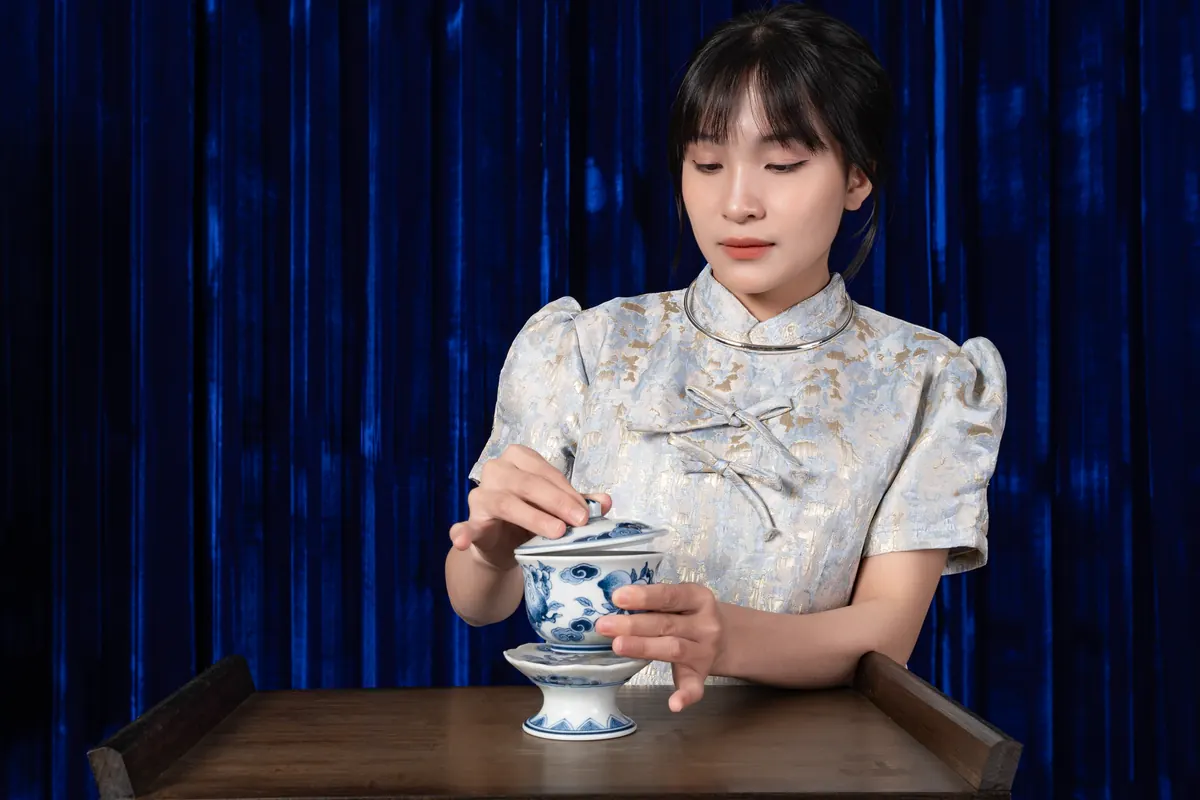
Two habits separate a decent cup from a muddled one. First, pour with intention: a slow, steady stream that empties the gaiwan in a few seconds, not a dribble that takes half a minute. Second, smell the lid. The underside of a gaiwan lid holds the most concentrated aroma of the tea, and it changes steep by steep. Cup it in your hand, breathe in, and you learn more about the tea than any tasting note can tell you.
Most gongfu etiquette exists to keep the session relaxed, not to test you. The short version:
Hold the rim, not the body: thumb and middle finger on opposite edges, index finger resting on the lid knob with the lid pushed slightly back to leave a pouring gap. Pour with the gaiwan close to the pitcher, and never fill it past two-thirds.
You are almost certainly over-steeping. Watch the clock for a few sessions rather than guessing, and remember that the ladder should move upward slowly. Water that is too hot for the tea does the same damage.
Warm the cups beforehand, keep the kettle near the boil, and work a little faster. A small session for two people stays hotter than a large one that waits.
Aim for twenty minutes, two or three times a week, with one tea you know and one you don't. Keep it on a tray near the kettle so setting up takes a minute, not ten. Wash porcelain and glass in hot water with a mild soap and dry them well; keep unglazed clay rinsed with hot water only, since it absorbs what it meets. The spent leaves go in the compost.
One note if you are sensitive to caffeine: gongfu cha uses a lot of leaf, so even small cups add up. Drink earlier in the day, and check with a doctor if you have a condition affected by caffeine.
Resist the urge to buy a bigger set until you know which part of the ritual you love. Some people chase aroma and end up with a shelf of oolongs; others fall for the deep, dark steeps of puerh. Both paths start exactly the same way: a small pot, a little water, and a willingness to taste the same tea change.
Photo: Gốm sứ Cương Duyên / Pexels