Ask anyone who buys tea at volume what changed this year, and you rarely get a dramatic story. You get small ones: a first flush that landed early, a shipment held up over missing paperwork, a supplier emailing about a price increase with genuine embarrassment.
Taken one at a time, these are annoyances. Taken together, they describe an industry quietly reorganising itself — around weather that no longer keeps to schedule, buyers who want proof rather than promises, and consumers who are willing to pay more but expect to understand what they're paying for.
Here are seven shifts worth watching through 2026, and what they mean whether you buy, sell, or simply drink the stuff.
Tea is a crop with a calendar, and that calendar has loosened. Growers in several major regions report earlier spring flushes, longer dry spells between rain, and heavier single downpours instead of steady monsoon drizzle. Frost arrives in places that rarely saw it; heat stress hits gardens that once counted on cool nights.
The practical consequence is that vintage assumptions no longer hold. A grade you bought in April three years ago may now be at its best in March, or taste thinner because the bushes pushed leaf too fast. Buyers who cup small lots several times through the season catch these shifts early. Buyers who place one annual order and hope for the best end up with surprises in the warehouse.
For years, origin storytelling was optional garnish: a farm name on the tin, a photograph of pickers, a paragraph about altitude. That has changed. Retail buyers, food safety authorities in major markets, and increasingly consumers want records — which lot, which field, which week, and under what conditions it was made.
Residue limits on pesticides have tightened in several importing markets, and environmental claims are under closer scrutiny from regulators than they were a few years ago. Meanwhile, questions about wages and labour practices are landing on suppliers directly from buyers, not just from auditors.
Small growers often have the tea and not the paperwork. Helping them build simple records — a notebook, a shared spreadsheet, a phone photo of the invoice — is now part of a buyer's job, not a favour.
Costs have risen across the chain: field labour, fertiliser, fuel, freight, and packaging. Substitution doesn't always help, since many of those inputs moved together. For commodity tea sold on price alone, margins are thin and getting thinner, and some producers are quietly shifting acreage or replanting.
At the specialty end, demand has held. Drinkers who care about a specific oolong or a single-garden Darjeeling tend to absorb moderate increases, especially if the reason is explained plainly. That is the opening: a clear note on an invoice about a dry season and a smaller crop builds more loyalty than a silent grade swap that customers eventually notice in the cup.
Most of the world's tea comes from small farms, and those farms are finding that scale matters. Shared processing factories, mobile withering units, group certification, and cooperative export desks let growers fill orders they couldn't handle alone.
The upside is consistent quality and access to buyers who won't deal with a hundred individual farmers. The friction is governance: agreeing on quality standards, splitting payments fairly, and managing the cash-flow gap between delivery and payment. Groups that write down their rules early tend to survive their first difficult season.
Tea is being planted in places it wasn't planted before — cool highland sites in Georgia and the Azores, small plots in the United States and Britain, expanding acreage in parts of Africa. Some of it is excellent, some of it needs a few more seasons to settle.
At the same time, established regions are adapting rather than retreating. Kenyan factories are pushing further into orthodox and specialty production. Japanese growers are experimenting with shading schedules. Taiwanese oolong makers are chasing cooler elevations. Buying an unfamiliar origin in a small quantity is a low-risk way to learn where the next interesting cup is coming from.
Terms like regenerative, carbon neutral, and plastic free are appearing on more packaging, and authorities in Europe and elsewhere have been tightening rules on environmental claims that can't be substantiated. That is good news for growers doing real work — shade trees, composting, water recycling, cover cropping, paying a living wage — and awkward for anyone relying on a badge and a hope.
Ask what the practice actually is. "We planted 400 shade trees along the eastern boundary in 2023 and cut our fuel use by switching to a smaller dryer" is verifiable. A logo is not. If a supplier can't describe a specific change on a specific field, treat the claim as decoration.
Demand is rising for matcha, cold-brew formats, ready-to-drink cans, low- and no-alcohol alternatives, and functional blends aimed at calm, focus, or digestion. High-grade tencha has been tight, and buyers report paying more for the top tiers.
A word of caution: tea is a pleasure, not a prescription. Health claims are regulated in most markets, so check local advertising rules before printing anything that sounds medical, and treat wellness positioning as flavour and ritual rather than medicine. For anything health-related, talk to a qualified professional.
None of this requires a crystal ball. It requires a little more attention, a little better record-keeping, and a willingness to taste often. Tea has survived worse than a strange season.
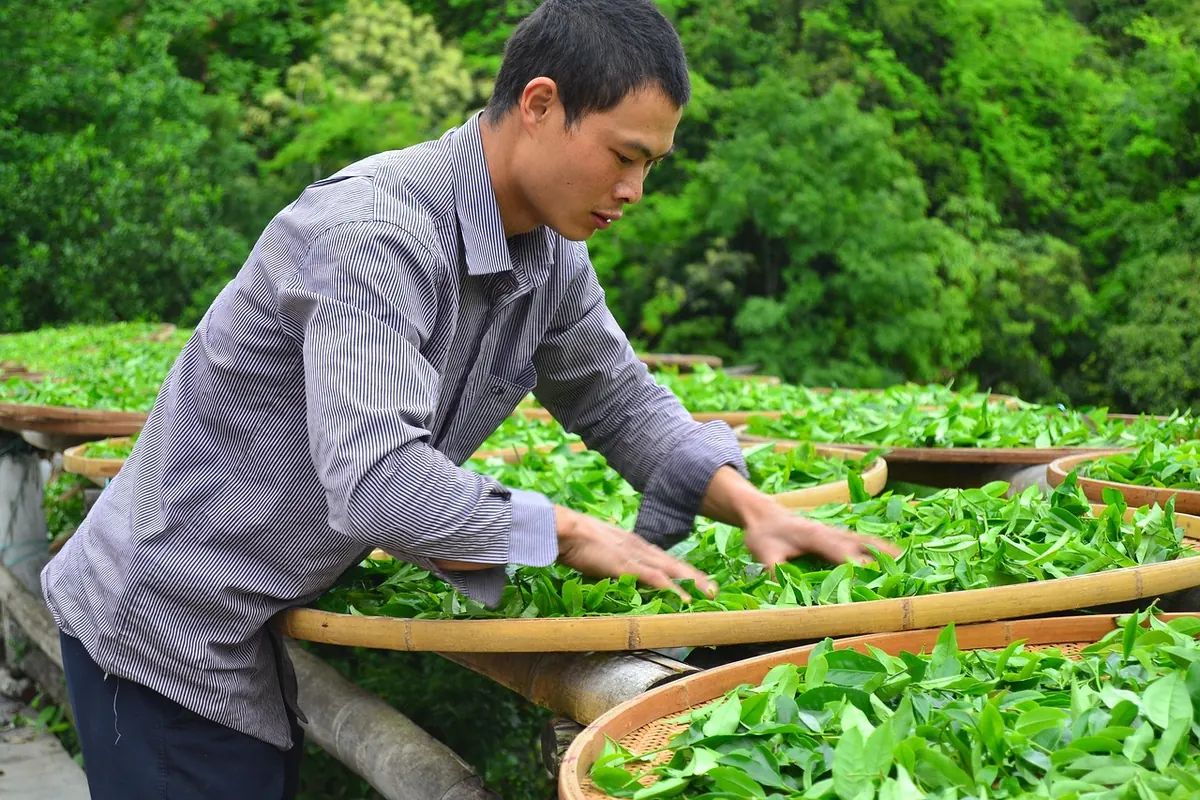
Photo: zhongxiong / Pixabay